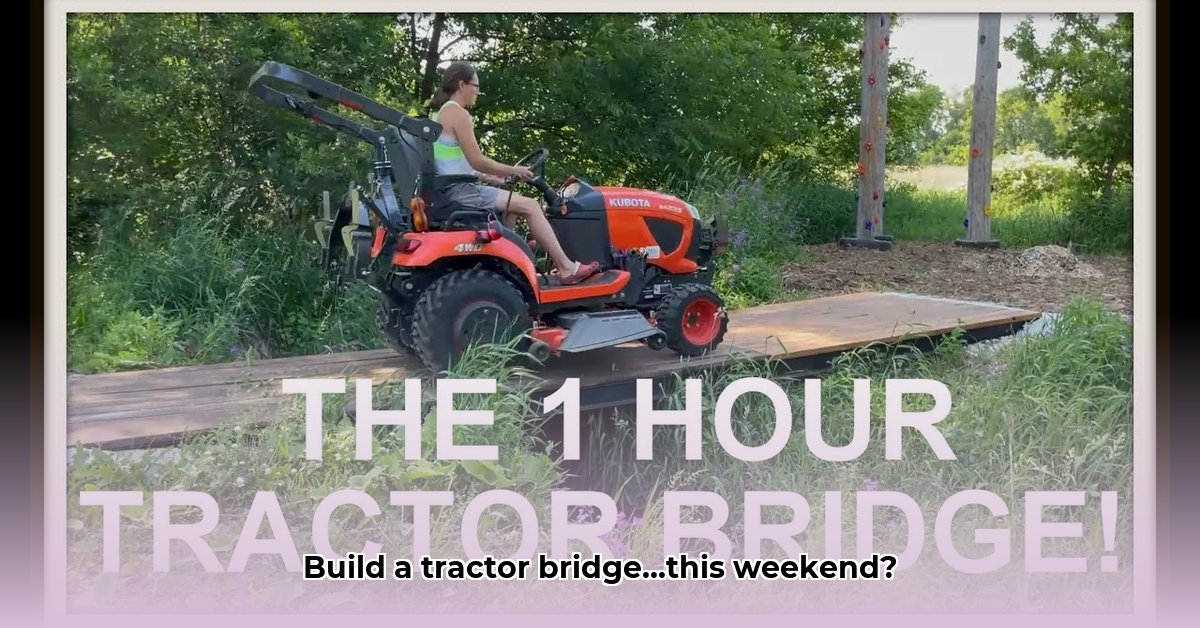
Tired of that muddy creek detour slowing down your farm operations? Building your own tractor bridge might sound intimidating, but it's surprisingly achievable! This guide provides two distinct methods: one using new materials for a straightforward approach, and another utilizing repurposed materials for a more budget-friendly, sustainable solution. We'll cover everything from planning and material selection to construction and safety, complete with real-world case studies from farmers who've successfully tackled this project. Let's get started!
Two Proven Methods for Building Your Farm Bridge
This guide presents two distinct approaches to constructing a robust and reliable tractor bridge, catering to different skill levels and budgets. Both methods prioritize safety and emphasize the importance of following local regulations. Which approach is right for you depends on your resources and experience.
Method 1: The "New Materials" Approach - Quick, Efficient & Reliable
This method prioritizes speed and reliability by using readily available, high-quality materials. It's ideal for those seeking a straightforward, relatively quick project.
Step-by-Step Instructions:
Site Survey and Preparation (Essential): Thoroughly assess the crossing location. Clear vegetation, level the ground, and determine the necessary bridge length and width to accommodate your heaviest equipment. Consider future expansion needs. A thorough survey ensures stability and longevity.
Building the Abutments (Foundation): Construct strong abutments (foundation supports) to anchor the bridge. Concrete is ideal for its strength and durability, but pressure-treated timber posts set deep into the ground can also be effective. The stability of these foundations directly affects the bridge's lifespan.
Installing the Stringers (Load-Bearing Beams): Position and secure heavy-duty pressure-treated lumber stringers (the main load-bearing beams) across the creek, ensuring they're level and firmly attached to the abutments. Use robust fasteners for maximum strength and stability.
Constructing the Deck (Driving Surface): Lay pressure-treated lumber decking boards across the stringers, creating a smooth, level surface for your tractor. Ensure boards are tightly spaced and secured to prevent movement.
Adding Handrails (Safety First!): Handrails are strongly recommended, particularly for higher or narrower bridges. This crucial safety feature enhances stability and prevents accidents.
Materials Checklist:
- Pressure-treated lumber (stringers, decking, abutments – quantities vary based on your design)
- Concrete mix (if using concrete abutments)
- Heavy-duty bolts, washers, nuts
- Gravel (for drainage)
Tools Needed:
- Measuring tape, level (laser level recommended)
- Shovel, post-hole digger (if using timber abutments)
- Circular saw or hand saw
- Drill, impact driver
- Concrete mixer (if applicable)
- Safety glasses, work gloves, hard hat
Estimated Budget: $800 - $2000 (depending on bridge size and material costs). Remember to factor in permit costs.
Method 2: The "Repurposed Materials" Approach - Budget-Friendly & Sustainable
This method emphasizes resourcefulness and sustainability by utilizing reclaimed materials. While more labor-intensive, it significantly reduces costs and minimizes environmental impact.
Step-by-Step Instructions:
Material Sourcing (The Treasure Hunt!): Carefully source strong, durable materials such as reclaimed railroad ties, old telephone poles, or heavy-duty pallets. Inspect them thoroughly for structural integrity. Don't compromise on safety – rotten wood is a major risk!
Site Preparation (Same as Method 1): Ensure a cleared and level foundation.
Abutment Construction (Adaptable): Adapt your abutment design to utilize salvaged materials where possible, reinforcing them with concrete footings if needed.
Support Structure Assembly (Creative): Strategically position your repurposed materials to create a stable support structure, carefully considering weight distribution. Sketching a design is strongly recommended.
Deck Construction (Secure!): Securely attach the decking, ensuring a smooth, level surface. Extra bracing is often needed.
Reinforcement (Crucial): Add extra support beams and bracing for increased stability and load-bearing capacity.
Materials List:
- Reclaimed railroad ties, telephone poles, or other sturdy materials (quantities depend on salvage and design)
- Strong fasteners (bolts, lag screws, wire)
- Possibly concrete for abutments
Tools Needed:
- All tools listed in Method 1, plus potentially specialized tools for handling heavy materials (e.g., a come-along or forklift)
Estimated Budget: $300 - $1000 (significantly lower material costs, but higher labor input).
Comparing the Two Methods: A Head-to-Head Analysis
| Feature | New Materials Method | Repurposed Materials Method |
|---|---|---|
| Initial Cost | Higher | Significantly Lower |
| Labor Involved | Moderate | High |
| Material Sourcing | Easy | Requires significant effort and careful assessment |
| Environmental Impact | Higher (new materials) | Lower (reusing materials) |
| Durability | High | Moderate to High (depending on material quality) |
| Skill Required | Moderate to High | High (resourcefulness and problem-solving skills vital) |
Troubleshooting and Preventative Maintenance: Ensuring Longevity
- Weak Foundations: Ensure abutments are deeply set and firmly anchored to prevent settling.
- Material Degradation: Regularly inspect your bridge for signs of wear; replace damaged components promptly.
- Weather Protection: Treat wood with preservatives and consider a protective coating to extend the bridge's lifespan.
- Safety First: Always use appropriate safety gear and never exceed the bridge's load capacity.
Remember to consult local authorities for permits and regulations before starting your project. Building your own tractor bridge is a rewarding endeavor; plan carefully, prioritize safety, and enjoy the fruits of your labor!